Candlebark 2m ARDF Event Sunday

I plan to run a full 2m ARDF event/training this Sunday 21st June based at Candlebark Park, Fitzsimmons Lane, Eltham.
Start:

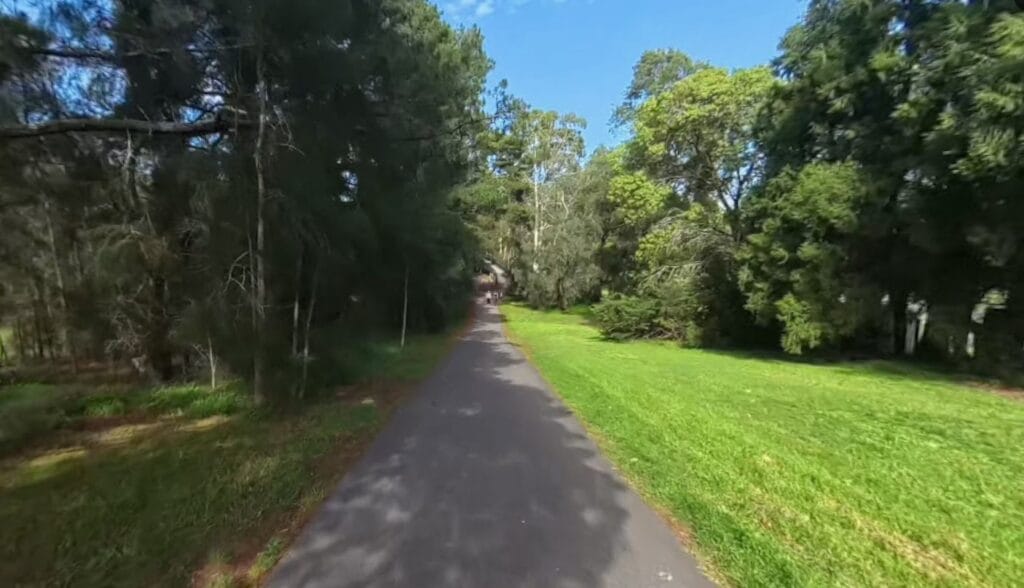
Homestead Road, Eltham, where the Diamond Creek trail crosses the road. Starts from 1pm to 2pm. Start window restricted to allow for a longer time limit.

The weather is currently a predicted top of 14Deg, with rain showers unlikely.

Notes for this event:

  • ARDF transmitters on 145.300 MHz with 5 minute cycle (1 minute each)
  • Homing Beacon on 145.700 MHz
    • You must visit the Homing beacon to get a valid result in this event
    • The Homing Beacon will be remote from the Start, to avoid interference. The Finish will be back near the Start location, so you may have to navigate there! (sorry Jack)
  • ARDF Start exclusion zone of 450m, and 300m between transmitters.
    • The Homing Beacon might not adhere to the Exclusion rules
  • Time Limit 100mins, but with a ‘soft’ landing (points deducted per min late)
  • Please observe the Out-Of-Bounds areas marked on the map, in order to allow future use of the park.
  • SI controls will be used (Can’t use Maprun as final TX positions will only be determined on Sunday!)
  • Transmitters can be placed anywhere on the supplied map

What do I need to do?

  • Let me know if you plan to come, email or Facebook
  • Bring your 2m sniffer (or let me know you want to borrow a club sniffer in advance)
  • Bring your SI stick (or let me know you want to borrow a club stick in advance)
  • Volunteer to pickup a transmitter afterwards
  • If you plan to compete in Japan, treat the start procedure yourself as if you are at an international event. I will not be enforcing the procedure; it is self imposed:
    • Do not turn on your sniffer at all till you depart on your start time (which will be at TX1 turn on)
    • Give yourself say 4 minutes to prepare your map/map board prior to your start (I plan to have the Start exclusion marked on the map already)
    • Do not stop moving in the start corridor (ask me where it ends)
    • Must punch Homing Beacon before Finish
    • Try to not rely of the soft landing overtime

Results

Started off an amazingly warm day for June. Thousands seemed to decide a walk or a bike ride in the parks was a good idea, so by the time I got to park at the Start location the carpark was already full!

The afternoon turned a bit cooler, but the rain held off. Perfect orienteering weather.

Here is a map showing all the TX locations (approximately). As I placed them on the day, these are only my rough estimates for where they actually ended up.
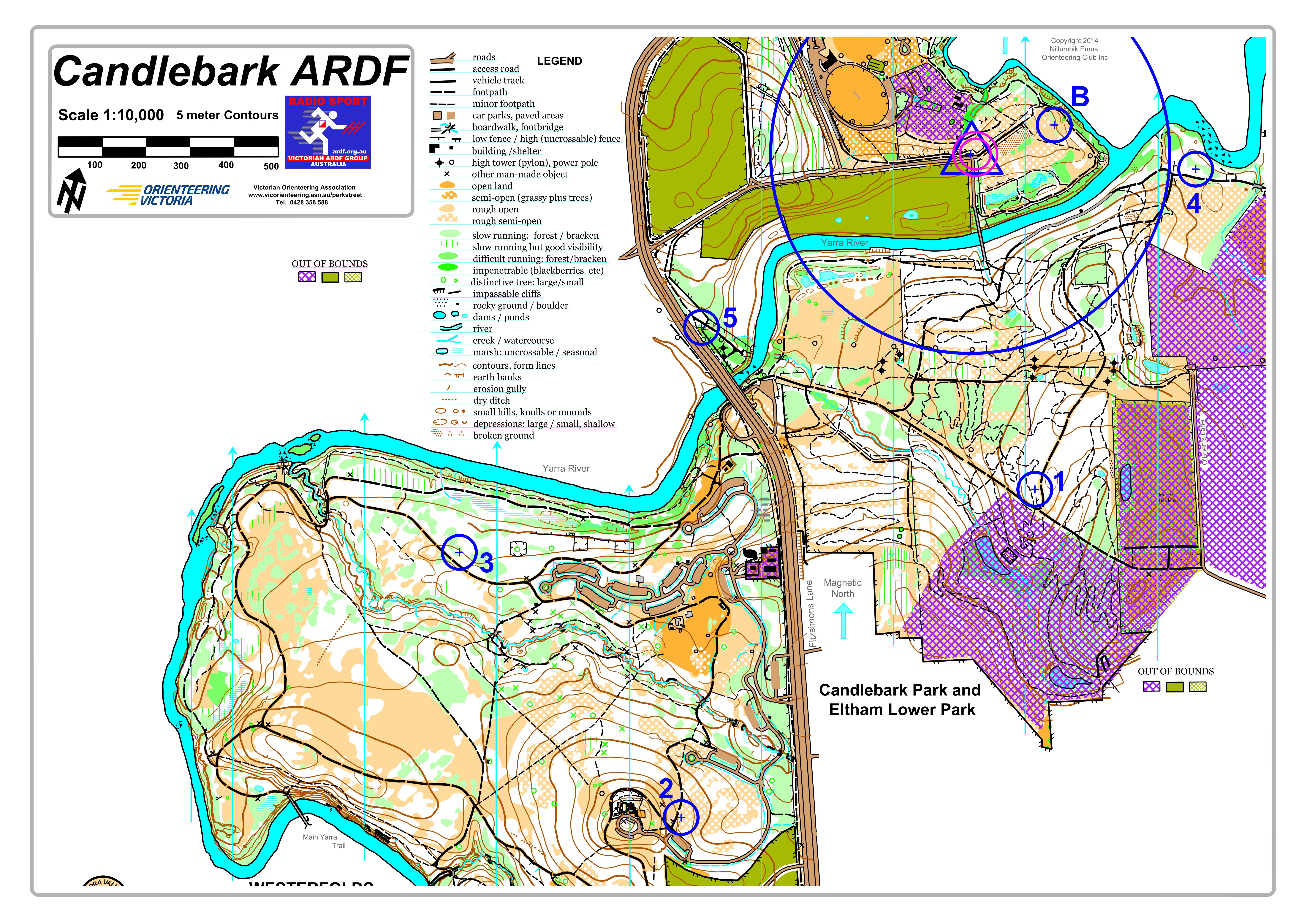
I wasn’t sure about whether the TX5 location would be OK till I checked it out in the morning, but it turned out fine. Though tricky, it seems more had difficulty getting good DFs to TX4.

The best three transmitter route was chosen by Henk & Di, who were walking, so given that they did a good sequence, taking in TX4 first, then TX1 and TX5. Others who got three ventured into Westerfold Park instead.

Monica got four, but alas should have run back from the Homing Beacon in order to lose only 3 or 4 points rather then 5, and she would have ranked far higher.

Suzanne is marked as an MP as she simply ran out of time (personal time, not event time) to get the Homing Beacon. She also knew where TX4 and TX5 were, but also didn’t have time to get them.

Alistair was so late he cancelled out all 15 of his transmitter (3) points.

Well done to Bryan & Darian for finding all 5 in the time limit. They both had difficulties getting good bearings at times, so the terrain certainly posed a challenge.

Here are the results:

Candlebark ARDF 2026
ARDFc
(12 / 12)
Place
Name
TXs
Points
Time
1.
Bryan Ackerly
25 p.
25
1:10:28
2.
Darian Panter
25 p.
25
1:15:24
3.
Jack Bramham
15 p.
15
1:20:04
4.
Henk DeJong
15 p.
15
1:30:09
5.
Dianne Shalders
15 p.
15
1:32:03
6.
Mark Diggins
15 p.
15
1:32:11
7.
Monica LoPresti
20 p.
15
1:44:06
8.
Hamish McDonald
5 p.
5
1:31:14
9.
Pierre Brokner
5 p.
2
1:42:09
10.
Peter Cole
0 p.
0
1:52:05
11.
Alistair Knowles
15 p.
0
1:59:00
 
Suzanne O’Callaghan
5 p.
2
MP

Created by MeOS 4.1.1702 (U2): 21/06/2026 6:22:31 PM


Thanks to Dianne for providing the much appreciated hot chocolate for the course setter, and the malleable coinage afterwards.
SERG Homebrew entry 2025

I was little bemused at the summary given of my homebrew entry this year. It was for a semi-automated tester for our foxhunt systems, and we actually did end up using it quite a few times over the Mt Gambier foxhunting weekend, amongst our multiple gear failures.

The description given of the tester itself was fine, but the SDR timing problem that prompted the tester in the first place was a bit misrepresented.

The issue had nothing to do with SDR software ‘not keeping up’ due to lack of PC resources, but more the discovery that the particular SDR software I was using, GQRX, has what can best be described as an underlying design flaw, rather than a software bug.

It’s a bit of task to re-write GQRX to remove the fault, so at present I get around the problem by effectively automatically restarting the SDR periodically; whenever the fox channel is changed, or every 10 minutes, before any time delays can manifest significantly.

As our SDR rotating system was only available less than half the time, due mainly to water ingress problems, I can’t say for sure, but I believe we didn’t experience any more timing problems.

Here is the Homebrew entry documentation. Of particular interest may be the story of the hunt for the timing issues in Appendix 1.

Christmas FoxOr

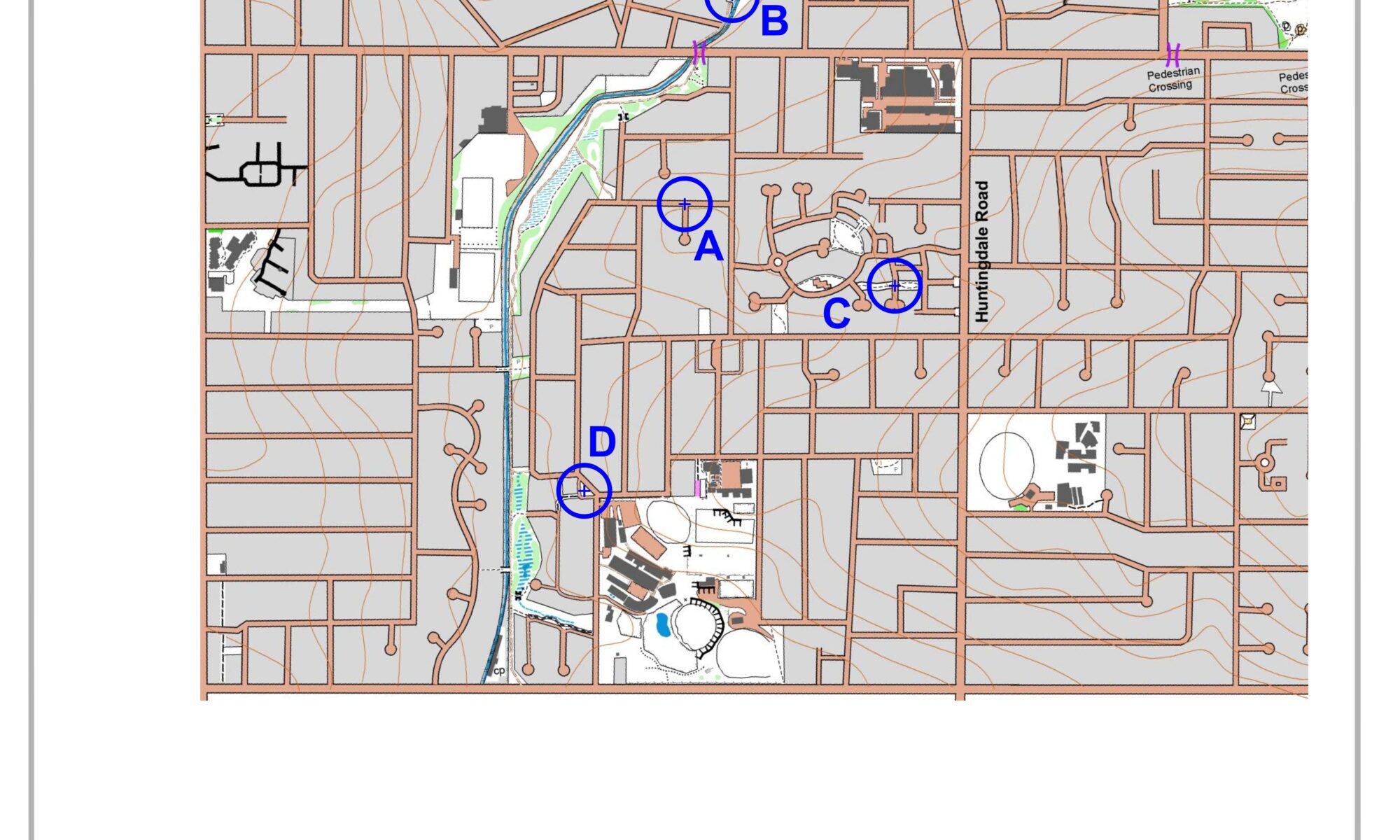
The club Christmas event was a FoxOr event with twist: The circle only tells you where you might hear the 1st FoxOr in a string or chain of FoxOrs. Once you find the first one, you should be able to hear the 2nd, and so on. Here’s the map the competitors saw:

You don’t know quite how long the chain you’re on currently is, other than it is between 1 and 5 long. In fact the chains were A=4, B=5, C=3 & D=1. I only had 13 transmitters!

You know there are 6 FoxOr frequencies to choose from, and a chain will never repeat a frequency (but between chains will, of course). You also know that as you follow out a chain, the next frequency will always be higher. In this case they were
A = 144.25, 144.75, 145.50, 145.70
B = 144.00, 144.75, 145.30, 145.50, 145.70 (144.00 was a mistake, was meant to be 144.25, but competitors knew beforehand)
C = 144.25, 145.30, 145.70
D = 144.25

Here’s the TX locations:

Things that went well:
– All the transmitters worked and could be heard.
– Nothing was stolen. Apparently some intrigued neighbours.
– The chain with the FoxOrs closest together (A), was perhaps the more difficult.
– There were transmitters people could visit when picking up TXs after that they hadn’t been to when competing.
– Noone had to be rescued.

Things that went not-so-well:
– Some considered it a bit hard to understand, or DF, or read the map.
– Grumbles about blackberries and fences on the A chain, but frankly these things were both self-inflicted. Read the map:)
– It was too long. No-one found all TXs, best was 9/13. I didn’t want too much interference between chains that could be confusing, so they had to be well separated, but that made it a bit long.
– FoxOr C-2 on 145.30 was (deliberately) 50% duty cycle, but could be heard over nearly the whole map. It was in the highest location (Essex Heights), and being a Sprint-TX in ‘FoxOr mode’ appears to have a bit more oompf. It’s only 1 range higher on the YNG sniffers, but that seems to make a big difference. In retrospect, lucky it was on a On/Off duty cycle. FoxOr C-3 was also a Sprint-TX, in Homing Beacon mode, but wasn’t as high up, so wasn’t as much of an issue.

Here are the full results:

NameTXsTX Penalty (mins late)Time (mins)
Monica987
Bryan886
Alistair890
Darian781
Geoff490
Jack355
Di & Henk4-292
Suzanne228
Pierre261
Mark273
Emily275

Karkarook Report

It was a blustery but warm day for the Karkarook Park Orienteerng and Sprint ARDF event on Saturday afternoon on 29th August.

Not only was the AR club running the Saturday afternoon Cake-O event, set and organised by Suzanne O’Callaghan, but the numbers were also boosted by AR members having a go at a 2m 5 transmitter Sprint-format ARDF event.

The new Map

Some orienteers were attracted by the new colour park map by AR member Geoff Hudson. This map had as the centrepiece the original 2005 Karkarook Park map by Adam Scammell, but now significantly updated from field checks by Bruce and Geoff. This was then extended by a colour street map of the area north of the bypass road, and extended south into industrial/retail estate. This region had previously been mapped by Steven Dunbar as a B&W street-O map for BK, but the detail was insufficient for park orienteering, so the decision was made instead to make a new colour map of the whole area.

Park O

There is a push to move Saturday Cake-O’s from just another street-O to a bit more park based orienteering, and the new map and the cunning course from Suzanne did not disappoint. She had to avoid much of the newly mapped intricate minor tracks around the lake itself, as this was mid-winter and things had a chance of getting sticky, but expect to see a summer event taking advantage of these in the future.

There was strange indirect hearsay of some discontent from some about actually having to navigate, but this was rumored to be from persons who really should know better anyway (bush-O people), and were really just caught out being lazy.

Notable placings are Lauris Stirling and Ros King in Power Walking, and yours truly & Phil Torode in Run45 (noting that Phil was riding a bike).

Control 9 was one of those controls where concentration was required, unlike depicted here

Sprint ARDF

Five 2m transmitters running 12s each, so the whole cycle takes 1 minute to repeat. The time limit was set to 90minutes, but a soft landing of 5 points/min late was applied instead of the normal ARDF sudden death overtime rule. Each TX was assigned 20 points, but due to a strange MapRun bug, the start and finish both counted as 20 points too.

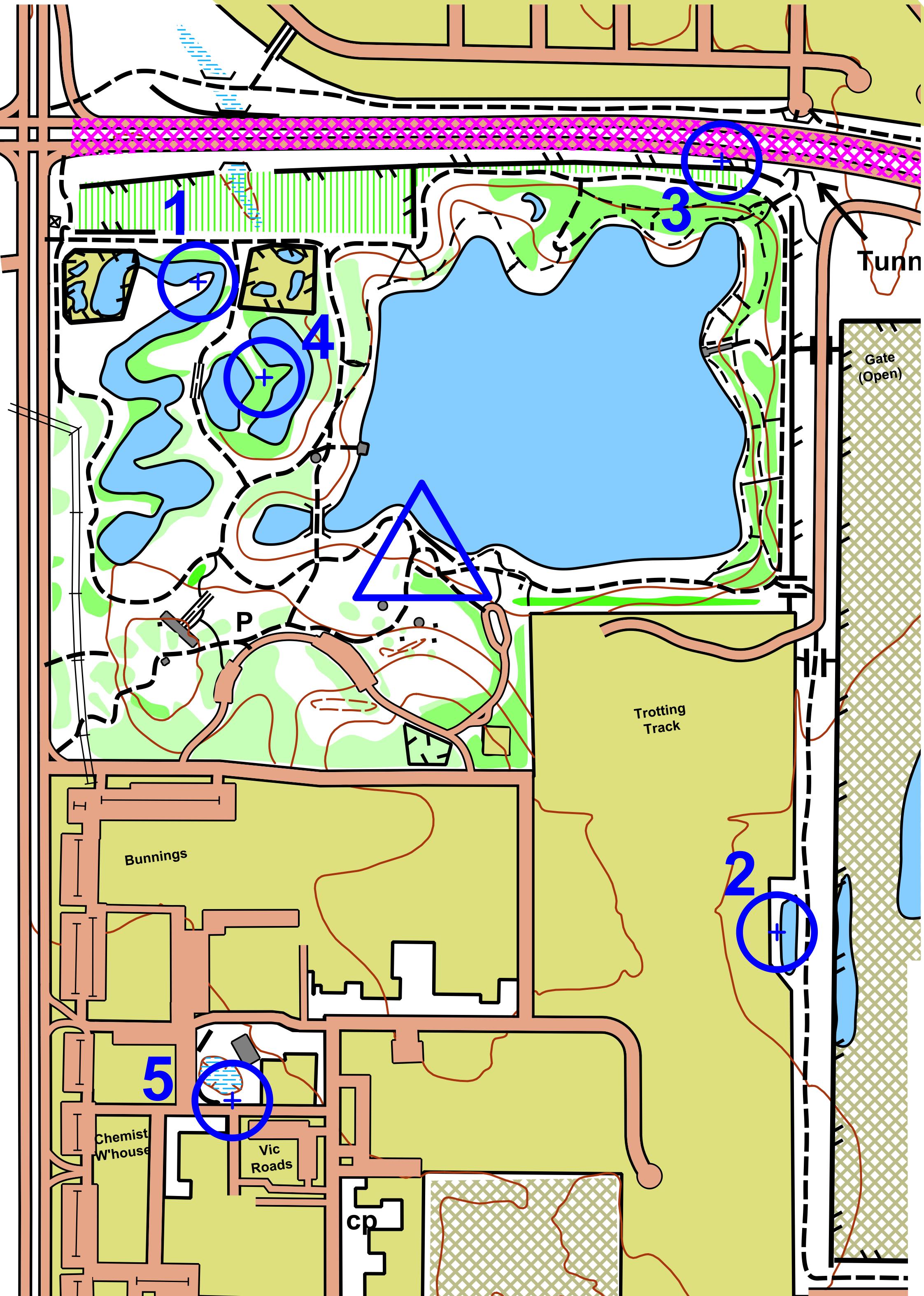
Transmitter locations

This map segment shows the 5 transmitter locations, but this is hidden from ARDF competitors both on the map and on MapRun when competing.

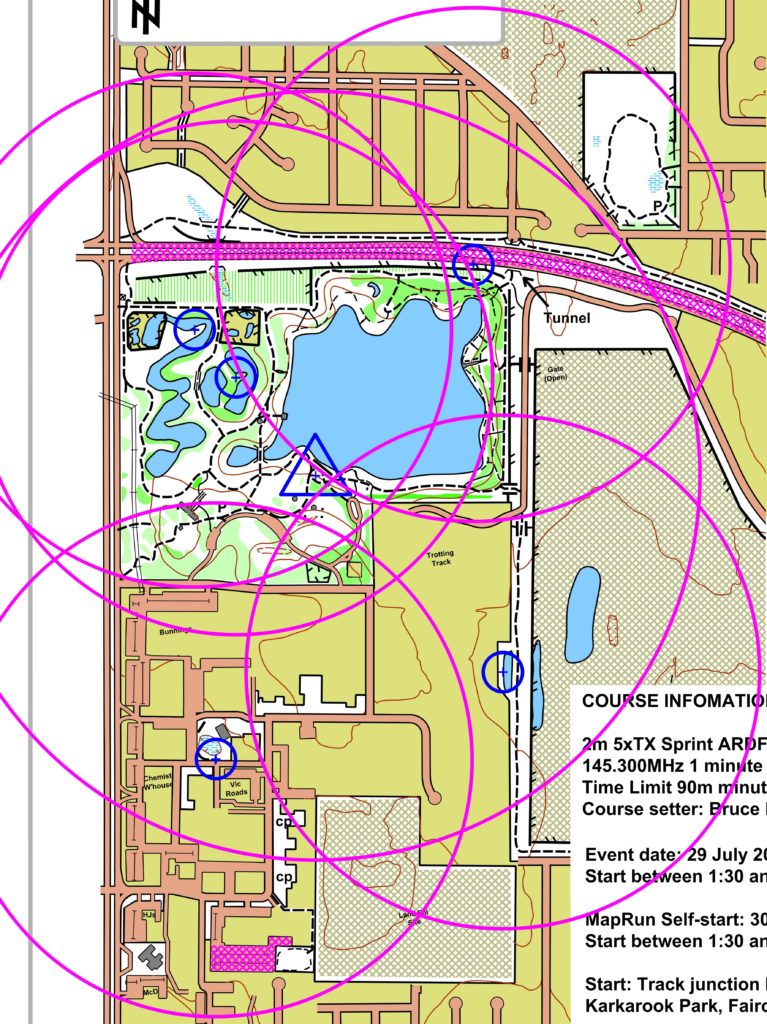
Some complained that the distance required for this Sprint event were more akin to a full classic ARDF, and though it is true the obstacles did make it longer than a typical Sprint, there were only half the number of transmitters than in a full double-stage Sprint ARDF. Also, here’s what the normal classic ARDF exclusion circles of 500m and 750m look like on this map:

Totally fails classic ARDF exclusion zones

11 ARDF competitors gave it a go on the day of the Cake-O, and Darian completed the event (total 12) only yesterday (Monday 7th). His time has been adjusted to exactly remove the time he spent actually retrieving each of the transmitters (thanks Darian!) as he went. Peter C enjoyed it so much the first time, he revisited Karkarook during the week to try to track down the transmitters he didn’t find the first time around. In that he was 50% successful.

Apologies to Dougie who replied just a tad late.

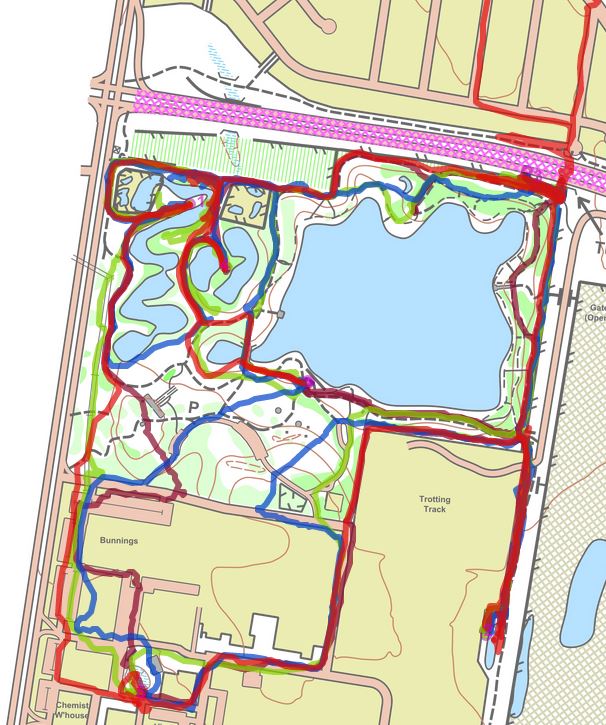
Here are the results. You can also see the routes taken.

Congrats to the placers: Bryan, Darian and Monica/Rod, just edging out Ewen from the placings, but who also located all 5 TX in time. Bryan also had the extra self-inflicted handicap of not using MapRun, and the transmitters were pretty well hidden from public view.

Here are the 4 routes of those who found all the TXs:

Next Event

Peter Cole is setting the next AR street-O this Wednesday on Academy Hill.

Darian has plans for a Large Sprint format ARDF (or small classic ARDF) possibly using 30s TX timing as a compromise (2.5 minutes per cycle). Those traveling overseas soon should let Darian know when you’ll be back.

We wish Jack (as an official), Peter, Ewen & Jenelle the best of luck in Czech Republic at the World ARDF championships, 2023.

STEAMing ARDF

From Monica Lo Presti –  a teacher at Dromana College,

Dromana College offers a STEAM enhancement class for Year 7 and 8 students before school once a week. This term, students began to look at some of the basics of electronics, and even built their own crystal radio from a kit. As part of this program, one of the teachers in charge asked me if I could run a session based on my experiences with amateur radio and ARDF. As a result, on Tuesday 8th August I was able to speak to the students about what Ham radio is, and the activities that those with and without an amateur licence can participate in.

After running through the basics, and showing a short video from one of the Mount Gambier foxhunting championships, students were shown a fox-or transmitter, and how to use a sniffer to find it. I set up a course of five transmitters that were hidden around the school that students then worked in pairs to find. There were varying levels of success with most groups finding at least two transmitters, while some were able to find all five. Some groups also struggled as an unknown source was transmitting a signal in one corner of the course.

Overall students had lots of positive feedback for the morning. Many commented on how much fun they had, along with enjoying the practical nature of the event and excitement of finding the transmitters.

Monica